
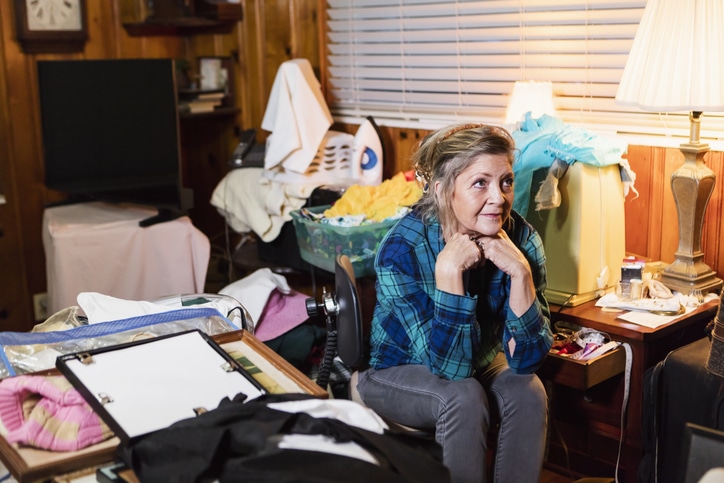
There’s a difference between a lived-in home and one that is starting to feel hard to live in. When too much stuff begins to crowd the space, it can add tension and create real safety concerns. Clutter and stress for older adults often go hand in hand, especially when the home no longer supports the life being lived inside it.
A cluttered home can make life harder in ways that are easy to underestimate. Excess clutter can raise the risk of tripping and falling, make it harder to keep track of bills and medications, and create environmental hazards such as dust, mold, mildew, insects, and rodents. In some cases, clutter is also connected to depression, anxiety, or early cognitive changes.
Why Clutter Can Become Such a Big Issue
For many older adults, clutter is not just “stuff.” It can represent memories, security, identity, or the belief that an item might still be useful someday. That’s one reason these situations can become emotionally charged so quickly. What looks like junk to you may represent history, comfort, or control to the person you love. If you come in talking about throwing things away, they may think first about loss, not relief.
How Clutter Affects More Than the House
When a home becomes too crowded, the stress does not stay neatly contained to one room. It can start to shape the entire day. Some of the biggest ways clutter can affect an older adult include:
- More anxiety. A crowded, disorganized space can make it harder to relax, concentrate, or keep up with everyday tasks and activities.
- Higher fall risk. Narrow walkways, piles on the floor, and hard-to-reach essentials can turn every movement into a hazard.
- Harder routines. Bills get buried. Medications are misplaced. Cooking, bathing, and dressing can all become more difficult when the home is not functioning well.
- More isolation. An older adult may stop inviting people over because they’re embarrassed by the condition of the house.
- Less control, not more. Ironically, keeping everything can make life harder to manage, not easier.
How to Help Without Taking Over
This is where it gets tricky. You see a problem that needs attention, but you don’t want your loved one to feel bulldozed in their own home. A gentler approach usually works better than a dramatic cleanup.
Start with a conversation, not a trash bag. Talk about health and safety instead of criticizing the condition of the house. If the person is open to help, work in small steps, such as one room at a time or even one section of a room, so the process doesn’t become overwhelming. A slower pace protects dignity. It also gives the person the chance to stay involved in the choices.
One practical method is to sort items into three groups:
- Items to keep and put away
- Items to donate
- Items to throw away
For sentimental belongings, it can help to keep one especially meaningful piece and pass the rest along to family members or others who can use them.
When Clutter Points to Something More Serious
Sometimes clutter is not just clutter. If the home conditions are affecting daily life, finances, health, or safety, it may be time to bring in outside support. When anxiety or depression is part of the bigger picture, additional help may also be appropriate.
That does not mean you need to jump straight to worst-case conclusions. It simply means the house may be telling you something important.
Support Can Make This Easier on Everyone
Trying to tackle a cluttered home can put a lot of strain on the relationship between you and your loved one. Our caregivers can help reduce that strain by offering support with organization and light housekeeping, as well as friendly companionship to alleviate isolation. Sometimes the real goal is not a picture-perfect house, but simply a safer, calmer, more workable living space.
If you’d like to explore the option of bringing in a Senior HomeCare of Tucson caregiver to help someone you love in Oro Valley, Catalina, Tucson, or the surrounding areas, reach out to us at (520) 355-4787. We’re always here to help.